
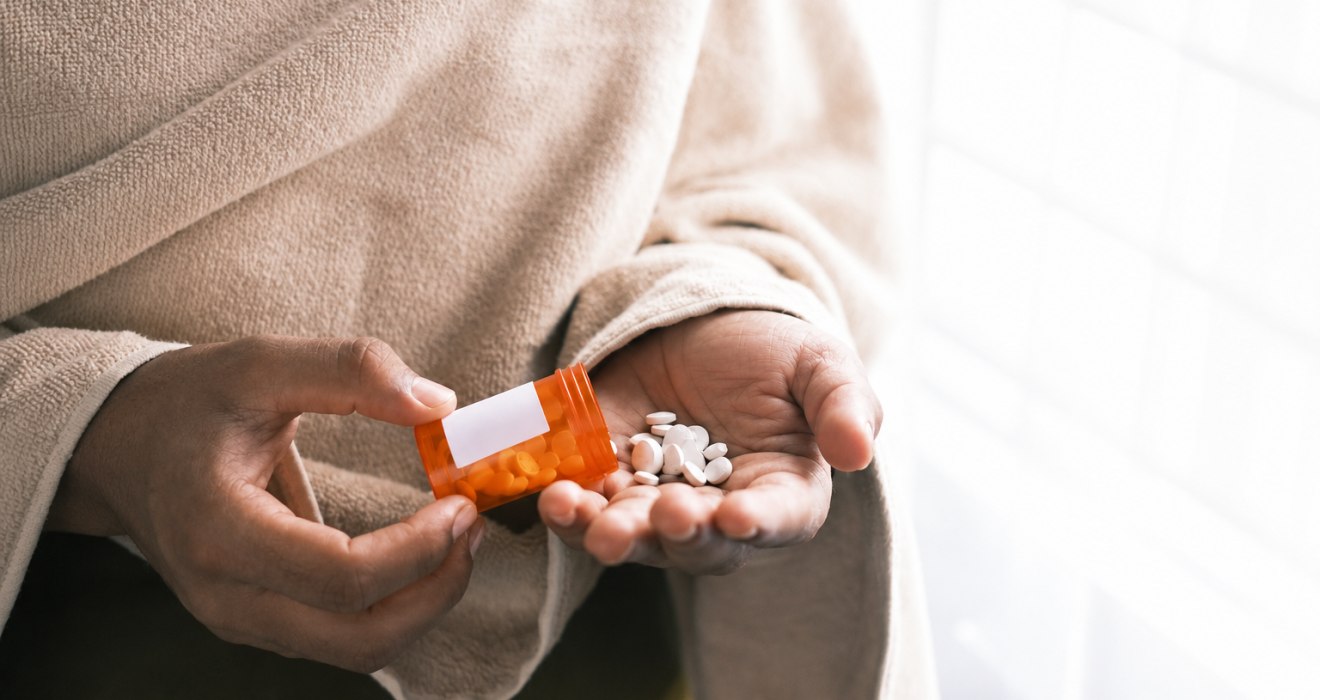
The Dangers of Self-Medication: What You Need to Know
Author: Maimuna Abubakar.
Editorial review: Adebowale Bello.
Introduction
Amaka had been having headaches for days. Between lectures, assignments, and the rigours of campus life, she assumed it was just stress catching up with her. When the headache returned again that evening, she mentioned it to her roommate.
“Take this,” her roommate said, handing her some leftover antimalarial tablets she had previously used weeks ago. “It helped me.” Amaka took it without a second thought.
Sound familiar? Most of us have been there.
Self-medication is so common that so many individuals do not see the dangers. You may assume that every similar symptom can be treated with the same drug and most times, people practice self-medication with the intention that the drug will help them just as it helped a relative or friend with the same symptoms.
However, having the same symptom might not necessarily point to the same root cause, hence that drug that worked for Mr A may likely not work for Mr B.
No doubt, there are certain drugs that could help reduce or eliminate symptoms but they may not completely treat the cause and the symptoms may return after a while. Furthermore, the World Health Organisation (WHO) guidelines show that some key dangers of self-medication include delayed diagnosis, harmful drug interactions, and increased antibiotic resistance.
Most times, you could practice self-medication without realizing you are doing it. This is the reason this article was written. To help you understand common ways people self-medicate, dangers associated with self-medication, and better ways you can care for yourself.

What is Self-Medication
Self-medication means taking drugs without a doctor’s prescription. It often starts with the simple thought of wanting fast recovery or sometimes, having no money for proper care. In addition, taking over-the-counter drugs —medicines you can get without a doctor’s prescription— without following the proper dosage, duration, or instructions is also self-medication.
Self-medication also happens when you continue taking prescribed drugs beyond the recommended duration probably because symptoms persist. In that case, the best thing to do is to return to the doctor. Sometimes, patients feel that one drug is not enough, so they take different medications to get faster relief and this is also self-medication.
Why Do People Self Medicate?
According to a 2021 study published in the African Journal of Health Sciences, self-medication prevalence in Nasarawa State, Nigeria was found to be 87.7%. This shows that self-medication has become a normal practice among Nigerians. So, let’s see some reasons why people self medicate:
-
Healthcare costs and access barriers:
Many families struggle with the cost of healthcare. People in rural areas may also lack access to good hospitals, so in most cases they have no choice than to buy drugs when they are sick.
-
Time constraints:

Workers, students, and parents are often busy. Long hospital queues also discourage visits, so they take drugs without proper diagnosis.
-
Perception that some conditions are minor:
Some people assume certain symptoms are “just normal” and treat them with drugs from medicine stores.
-
Previous experience and desire for quick relief:
This is one of the reasons people self-medicate. They assume similar symptoms mean the same illness. Sometimes, they mix drugs to feel better quickly, which can be dangerous.
-
Trust in the recommendations of a pharmacy staff:
Some people rely fully on patent medicine vendors. However, not all conditions can be properly diagnosed at drug stores, so it’s important to be cautious.
Why Self-Medication is Dangerous
Self-medication has become a daily thing among Nigerians without knowing the extent of its dangers. These are some of the risks of taking drugs without prescription:
-
Masking Symptoms of Serious Underlying Conditions
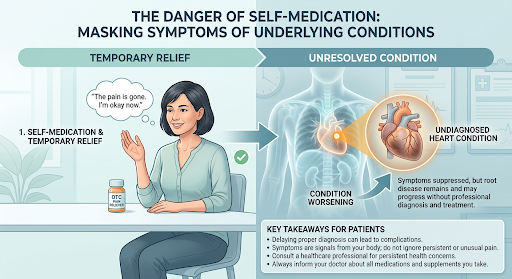
When symptoms persist despite medication, it often means the root cause is still present. Self-medication can delay proper diagnosis and worsen conditions.
While working at the hospital, I observed a couple who brought their child to the hospital after weeks of treating him at home. He had headaches and a fever which they assumed was not serious and by the time they arrived, his condition had worsened, and he needed an emergency blood transfusion. They lost him not because they were careless, but because they did not know the symptoms were signs of something more serious. This is why self-medication is dangerous.
Sometimes, a headache you feel and assume to be from stress, might be linked to high blood pressure, not just pain that paracetamol can treat. Always seek proper diagnosis.
-
Incorrect Diagnosis and Wrong Treatment
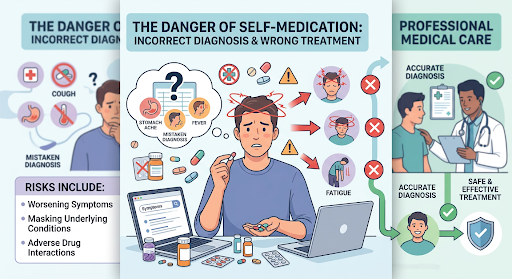
Treating yourself without proper consultation can lead to a wrong diagnosis and incorrect treatment because similar symptoms do not always mean the same illness. There are people who take Flagyl when stooling, without knowing if the cause is bacterial or parasitic.
-
Medication Interactions and Side Effects
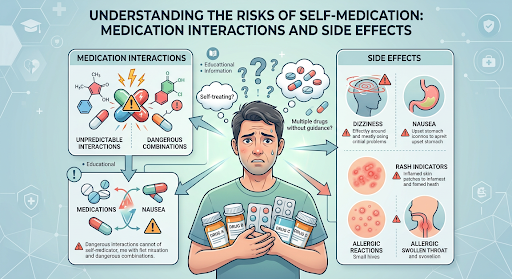
Medicines act differently on the body. Some combinations can cause adverse drug reactions or side effects. Studies on self-medication warn that combining medications without professional guidance can increase the risk of harmful drug interactions and serious adverse health outcomes. Abuse of certain medications can lead to a lot of problems. Doctors and pharmacists check for safe combinations before prescribing.
-
Antibiotic Resistance
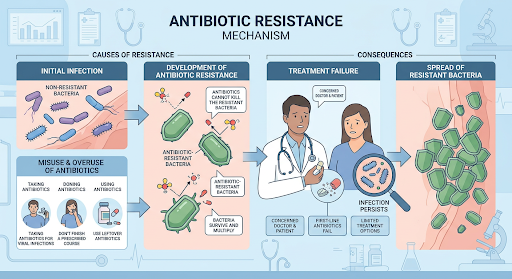
Misuse of antibiotics can make bacteria resistant. According to the World Health Organization, antibiotic resistance was directly responsible for 1.27 million global deaths in 2019 and contributed to nearly 5 million deaths that same year.
Not completing dosage, using leftovers, or unnecessary use of antibiotics contributes to antibiotic resistance from self-medication. This is why you should always finish your antibiotics dosage your doctor prescribed.
Once resistance develops, the antibiotic may no longer work and repeated use of the same antibiotic can make infections harder or impossible to treat.
Related: Why Should You Always Finish Your Antibiotics?
-
Dependency and Addiction
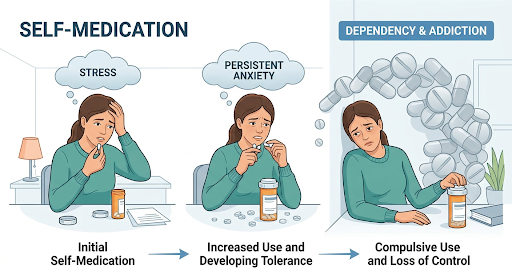
One of the dangers of misusing over-the-counter drugs is addiction. When a medicine you should take occasionally becomes a regular thing, you become dependent on it. Complete reliance on sleeping pills, cough syrup, and pain relievers can become addictive when used frequently without medical supervision.
Common Self-Medication Practices That Can Be Dangerous
It’s possible you have self-medicated once or twice without realizing you did it. Some common ways people self-medicate include:
- Using leftover prescriptions: Taking old medication because symptoms seem similar is risky because drugs may be expired or unsuitable.
- Sharing medications: A drug that works for one person may not work for another due to different conditions.
- Taking medications “just in case”: This can contribute to antibiotic resistance and reduce drug effectiveness.
- Taking over-the-counter medications without guidance: Some people take different medications like pain relievers, cough syrup, and cold medicines together. This can cause overdose dangers or harmful interactions.
- Continuing medications beyond prescribed duration: If symptoms persist, consult a doctor instead of extending use.
- Using herbal remedies with medications without disclosure:Herbal drugs can interfere with prescribed medications.
When is Self-Care Appropriate?
It is not every symptom that requires a doctor’s visit. Self-care can be appropriate in some cases:
- Take over-the-counter medications for minor symptoms like pain, mild coughs and colds, diarrhea, constipation, acne etc.
- Administer basic first aid for minor injuries
- Rest and stay hydrated
- Use pain relievers for known minor conditions like menstrual cramps or tension headache
It’s always important to follow your doctor’s instructions and prescribed dosage. If symptoms persist for 2–3 days, it’s better to see a doctor as self-care is not the same as self-medication.
When to See a Doctor Instead of Self-Medicating
Even though it’s okay to take over-the-counter drugs, there are situations that warrant seeing a doctor immediately.
You should see a doctor when:
- Symptoms are severe or worsen: When you observe that your symptom is severe, don’t rely on self-medication. It’s important to see a doctor immediately.
- Symptoms persist after medication: In a situation where you continue having your symptoms even after completing your drug dosage, go to the hospital and see a doctor instead of getting another drug. This helps prevent self-medication and drug resistance.
- High fever above 38.5°C: Don’t depend on taking drugs at home when your body temperature gets so high. Some people continuously take drugs like paracetamol even when the body temperature is still high.
- New symptoms appear in chronic conditions: When you have a condition you’re managing with proper medications but observe having new symptoms, go and see a doctor immediately. Don’t assume your drugs will take care of it, go to the hospital.
Seek emergency care if:
- Severe chest pain or difficulty breathing: When you are having difficulty in breathing, don’t just get any drug or wait for your routine checkup. This calls for emergency care, so get help immediately.
- Sudden severe headache or dizziness: Never assume a pain reliever will take care of severe headache. When you experience dizziness, this needs emergency care.
- Allergic reactions (swelling, rash, breathing difficulty): Allergic reactions need immediate attention. Some people will tell you to drink and rub palm oil. Of course, there are herbal medicines, but in the case of an allergy, you need to see a doctor immediately.
- Severe abdominal pain or uncontrolled bleeding: Never assume you can manage abdominal pain or uncontrolled bleeding at home with drugs. Excess bleeding could result in low blood level which requires immediate attention.
- Loss of consciousness: When a person loses consciousness, it’s not ideal to be jumping and shouting close to the person. The best thing to do is to administer emergency care and take the person to the hospital.
Always trust your instincts. If something feels wrong, seek help immediately because delay is dangerous.
What to Do Instead of Self-Medicating
There are proper and better alternatives to help you avoid self-medication.
For minor symptoms:
In the case of minor symptoms like slight headache, not very high body temperature, leg pain etc, there are things you can do at home. They include:
- Use over-the-counter drugs with direction from a healthcare provider
- Take some rest, stay hydrated and apply warm/cold compress
- Keep a diary where you record your symptoms to discuss with a doctor when the symptoms persist.
Related: How to Clearly Explain your Symptoms to a Doctor – 7 Key Questions to Ask
For access barriers:
If you live in a place where access to good healthcare services is difficult, you can do these:
- Use telemedicine if available
- Visit community health centers
- Ask pharmacists for drug guidance only (not diagnosis)
- Plan ahead and always address health concerns before they become urgent
For financial concerns:
We cannot ignore the costs of accessing good healthcare services, so finances can also be a thing of concern. However, you can tackle financial concerns through:
- Discussing cost concerns openly with healthcare providers
- Asking about medications options to get the one you can afford.
- Inquiring about payment plans to cover laboratory tests, drugs, scans etc
- Prevention is always better and more affordable, so stay safe
Building healthcare relationships:
It’s always a good thing to build healthy relationship with the healthcare facility and the workers because:
- Regular checkups allow early detection and prevention
- Having good relationships with healthcare providers, make future visitations more efficient
- Your doctor understands your health history and can advise appropriately
Conclusion
Self-medication is often practiced without realizing its dangers. Taking drugs from friends, using leftovers, or mixing medications are common examples.
Although healthcare access has challenges, self-medication is not the solution. Self-care is acceptable for minor symptoms, but persistent symptoms require medical attention.
Building a relationship with healthcare providers and trusting proper diagnosis is essential. Good health is non-negotiable, and proper care will always be the safer choice. Always see a doctor when you observe changes in your health.
Disclaimer: This content is for informational purposes only and is not medical advice. Consult a qualified healthcare professional for diagnosis and treatment.
References
Abuse, National Institute on Drug. Over-the-Counter Medicines DrugFacts | National Institute on Drug Abuse (NIDA). 17 Dec. 2017, https://nida.nih.gov/publications/drugfacts/over-counter-medicines.
Antimicrobial Resistance. https://www.who.int/news-room/fact-sheets/detail/antimicrobial-resistance. Accessed 8 May 2026.
Bassi, P. U., et al. “Prevalence and Determinants of Self-Medication Practices among Nigerians.” African Journal of Health Sciences, vol. 34, no. 5, Dec. 2021, pp. 634–49. www.ajol.info, https://www.ajol.info/index.php/ajhs/article/view/218297.
Dare, Samuel Sunday, et al. “Behavioural Response To Self-Medication Practice Before and During Covid-19 Pandemic in Western Uganda.” Patient Preference and Adherence, vol. 16, Aug. 2022, pp. 2247–57. PubMed Central, https://doi.org/10.2147/PPA.S370954.
Nguyen, Cuong Tat, et al. “Prevalence and Impacts of Self-Medication in a Disadvantaged Setting: The Importance of Multi-Dimensional Health Interventions.” Frontiers in Public Health, vol. 11, July 2023, p. 1176730. PubMed Central, https://doi.org/10.3389/fpubh.2023.1176730.
“Why Should You Always Finish Your Antibiotics?” The Patient–Doctor Forum Nigeria, 14 May 2026, https://www.pdforumng.org/why-should-you-always-finish-your-antibiotics/.